
Sensor nodes: our own sensors, local and without a manufacturer cloud.
Compact sensor nodes for the ceiling plus door and mirror modules, programmed to suit your needs. They deliver their readings directly to your smart home, without going through third-party servers.
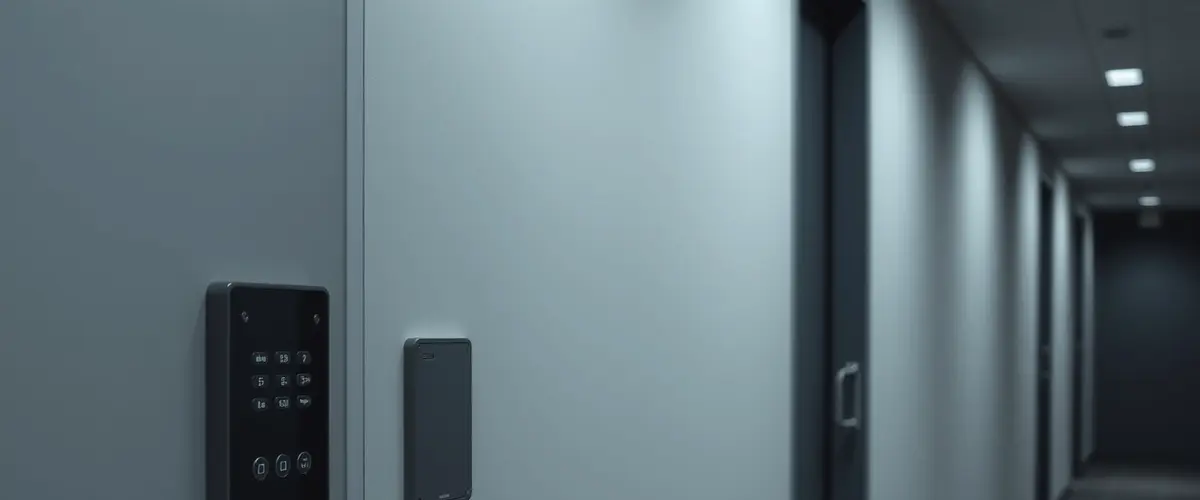
Why our own sensors
No manufacturer cloud: the readings do not pass through third-party servers.
- Ceiling room sensorsCompact design for mounting on the ceiling. Depending on the model, powered by battery or PoE, i.e. power over the network cable.
- Door and mirror modulesModules for doors and mirrors, also connected directly to your smart home.
- Firmware as neededWe program the nodes the way your property requires and adapt the firmware when needed.
- Direct and localThe readings go straight to Home Assistant, even without internet.
When your own sensor nodes make sense
Off-the-shelf sensors cover many tasks. Custom nodes pay off where ready-made devices do not fit.
- Nothing suitable on the market
- The mounting position, the form factor or the combination of readings does not match any ready-made sensor. Then we build the node to suit your property.
- Independent of the internet
- If the internet connection drops, measurement and automations keep running locally.
- Your needs change
- The firmware can be adapted. When a new task comes up, we adjust it.
How a sensor project works
- ConsultationWe work out what should be measured and which automation should follow from it.
- ConceptForm factor and mounting position: ceiling, door or mirror, to suit your rooms.
- Firmware and installationWe program the nodes, set them up on site in Berlin or Brandenburg and connect them to Home Assistant.
- SupportUpdates and changes via the secure remote access. If needed, we come by in person.
Key terms in brief
1x1-Smart Home relies on open standards such as Matter, Zigbee and KNX, with further standards such as Z-Wave on request, so you are not tied to any one manufacturer.
- FirmwareThe program running on the node. It defines what is measured, how often and where the readings go.
- ZigbeeA widely used wireless standard for sensors, lights and switches. Mains-powered devices relay signals and so extend the range.
- Z-WaveAnother wireless standard for home automation. In Europe it uses frequencies around 868 MHz, away from the often crowded 2.4 GHz Wi-Fi band. We integrate Z-Wave on request.
- MatterA cross-vendor standard that brings devices from different brands into one system. It runs over Wi-Fi, Ethernet or the Thread wireless network.
- KNXA mostly wired building automation standard for lighting, shading and heating, common in new builds.
Frequently asked questions
Do the sensor nodes work without internet?
Yes. The nodes deliver their readings directly and locally to Home Assistant. Measurement and automations keep running without an internet connection.
Which values does a sensor node record?
That depends on your needs and is defined in the firmware. We work out what makes technical sense during the consultation.
Can I keep using my existing smart home devices?
1x1-Smart Home is vendor-independent and relies on open standards such as Matter, Zigbee and KNX, with further standards such as Z-Wave on request. We check whether a specific device fits when we talk.
How are the sensor nodes powered?
Depending on the model, by battery or by PoE, i.e. over the network cable. We decide which option fits where during planning.
Can the firmware be changed later?
Yes. If your needs change, we adapt the firmware.
How is support billed?
By time and effort or as a monthly maintenance subscription, whichever suits you. We come on site in Berlin and Brandenburg, with or without a subscription.
Related
What should your smart home measure?
We program the sensor nodes to suit your needs and integrate them locally, in Berlin and Brandenburg.
0173 644 22 17